
RESEARCH PAPER
SUBMISSION
Sessions
JUNE 8-10, 2027
RESEARCH PAPER SUBMISSION
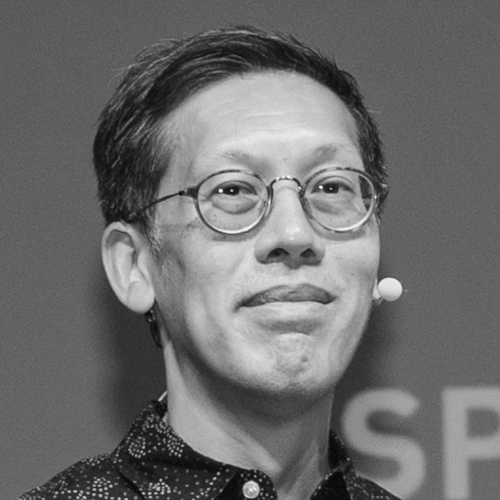
RESEARCH PAPER CHAIR
Richard Vuduc, Georgia Institute of
Technology, USA
Proceedings CHAIR
Grey Ballard, Wake Forest University, USA
Deputy RESEARCH PAPER CHAIR
Alice-Agnes Gabriel Scripps Institution of Oceanography, UC San Diego, USA
Deputy Proceedings CHAIR
Ariful Azad, Texas A&M University, USA
Calling all researchers, scientists, and engineers! Irrespective of your sector, if your research can contribute to the future of high performance computing, artificial intelligence, quantum computing, or new and emerging technologies, we are eager to receive your research proposal!
All papers presented at ISC 2027 will be published as fully open access in the IEEE Xplore Digital Library.

Dec 14, 2026
Abstract Deadline
Dec 21, 2026
Full Submission Deadline (no extension!)
MAR 15, 2027
Notification of Acceptance
JUN 8-10, 2027
Research Paper Sessions
All Dates
Mar 1, 2027
Author Rebuttals
Apr 8, 2027
Camera-Ready Submission
TBA
Short pre-recorded Video due
WHY SUBMIT A PAPER TO ISC 2027?
Free Open Access & Publication Coverage: ISC covers 100% of all publication costs to ensure maximum visibility for your research and open access to the broader community.
Complimentary Pass: One presenting author receives a complimentary 3-day conference pass (Tuesday – Thursday).
INFORMATION FOR SPEAKERS
Submission Guidelines
- Upload your research paper abstract (250 words) first and later the full paper in PDF format, up to 10 pages (references don’t count in the page limit). You must use one of the conference manuscript templates provided on the IEEE website. An additional page is allowed to include reviewer comments and improvements (10+1) for the camera-ready version of your paper.
- Authors may include as many pages of appendices as they wish, but reviewers are not required to read these. If you wish to include an appendix, please add it after your references and keep in mind the double blind guidelines.
- If any content in the Research Paper is generated using AI tools, authors must transparently and thoroughly describe their use in the methods, acknowledgment, or equivalent section of the paper. Description is not necessary for tools used solely for improving spelling, grammar, and general editing. Authors are accountable for the accuracy of information provided by AI tools and for referencing any supporting work based on that information.
- The double-anonymous review process applies to all submissions (see ISC High Performance Double-Anonymous Review Guidelines). Please refrain from including names, affiliations, funding sources, or acknowledgments in the heading or body of the document. Authors should cite their own work in a third-party manner rather than redacting the citations.
- Papers submitted for the Research Papers track should not have been previously published or under peer review for a different venue. Papers pre-posted to arXiv, institutional repositories, and personal websites remain eligible for submission.
- Membership on a program committee does not inherently create a conflict of interest in submitting a paper.
Review Process
- Each paper is expected to receive a minimum of 3 to 4 reviews.
- Papers will be evaluated based on novelty, fundamental insights, clarity of presentation, and potential for long-term impact.
- Reviewers will provide constructive, actionable feedback that can be used to improve the paper, whether it is eventually accepted or not.
- The Research Paper Committee reserves the right to reject incorrectly formatted papers.
Rebuttal Phase
- Initial reviewer comments will be made available to the authors by the committee.
- Authors can respond to clarify misunderstandings and answer questions.
- Rebuttals will be submitted in written format and will have a tight deadline.
- Authors will receive additional instructions via email.
Final Decision
- The paper’s track committee will consider all reviews and rebuttals.
- Live reviewer discussions will occur during the research paper committee meeting.
- A consensus-driven approach will be used to select the strongest papers.
- Notification of the papers’ outcomes will be sent to authors after the program committee’s meeting.
Terms & Conditions
- The research paper sessions will be held from June 8-10, 2027.
- By submitting a research paper, you agree that one of the authors will present the work in person at ISC 2027.
- For a paper to be included in the IEEE Xplore proceedings, at least one author must present it at the conference in person. Otherwise, the paper will be excluded from the proceedings.
- One author is eligible for a complimentary conference participation pass (Tuesday – Thursday).
- Every paper presenter is required to submit a short, pre-recorded video summary of their paper prior to the conference.
Presentation slides and short videos will be available on the event platform for registered attendees. - Travel, accommodation, registration fees for other authors, and other such expenses will not be covered by the ISC organizers.
HANS MEUER AWARD

Recognizing the best research paper at ISC, the award honors Dr. Hans Meuer, former ISC chair and co-founder of the TOP500 project.
The Award includes a certificate and a cash prize of € 3,000.
BEST STUDENT PAPER AWARD
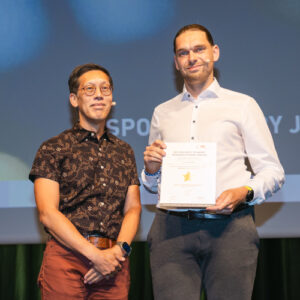
Honors the most outstanding student research paper presented at ISC. This award is meant to recognize promising work and promote the growth of talent in the HPC community.
The award includes a cash prize of € 1,000, kindly sponsored by Jeff Hammond.
HANS MEUER AWARD

Recognizing the best research paper at ISC, the award honors Dr. Hans Meuer, former ISC chair and co-founder of the TOP500 project. It includes a certificate and a cash prize of € 3,000.
ISC 2026 AWARD WINNER
PICO: Performance Insights for Collective Operations.
Authored by Saverio Pasqualoni from King Abdullah University of Science and Technology (KAUST) and Sapienza University of Rome, Tommaso Bonato and Torsten Hoefler from ETH Zürich, Lorenzo Piarulli and Daniele De Sensi from Sapienza University of Rome, and Marco Canini from KAUST.
TOPICS
The Research Paper Committee encourages the submission of high-quality papers reporting original work in theoretical, experimental, and industrial research and development in any of the following six topic areas.
Click on a topic area to view details.
System Architecture & Hardware Components
- Chiplets, Packaging, and Optical Interconnects
- Composable Disaggregated Infrastructure
- Data Center Infrastructure and Cooling
- Emerging Computing Technologies
- Energy Efficiency and Sustainability
- Extreme-scale Systems
- Heterogeneous System Architectures
- Memory Technologies and Hierarchies
- Networking and Interconnects
- Storage Technologies and Architectures
Programming Environments & System Software
- Compilers, Tools, and AI-Assisted Programming
- Cybersecurity in HPC and AI
- Energy Management
- File Systems
- HPC in the Cloud and HPC Containers
- Parallel Programming Languages
- Resource Management and Scheduling
- Runtime Systems for HPC
- System and Performance Monitoring
- System Deployment and Management
Algorithms & Performance
- Mixed Precision
- Novel Algorithms
- Optimizing for Power and Performance
- Parallel Numerical Algorithms
- Performance and Resource Modeling
- Performance Measurement
- Performance Tools and Simulators
Applications & Use Cases
- Application Workflows for Discovery
- Bioinformatics and Life Sciences
- Chemistry and Materials Science
- Earth, Climate and Weather Modeling
- Energy Applications
- Engineering Applications
- Geoscience Applications
- Industrial Use Cases of HPC, ML and QC
- Physics Applications
- Scientific Visualization and In-Situ Analysis
Artificial Intelligence
- Agentic AI
- AI Applications powered by HPC Technologies
- AI Factories
- Digital Twins
- Efficient AI – Low-Precision Formats, Sparsity, and Compression
- Foundation Models – Training and Inference at Scale
- HPC Simulations enhanced by Machine Learning
- HW and SW Design for Scalable Machine Learning
- Physical AI
- Sovereignty in AI
Quantum Computing
- Integration of Quantum Computing and HPC
- Quantum Computing Basics and Theory
- Quantum Computing Technologies and Architectures
- Quantum Computing Use Cases
- Quantum Error Correction and Fault Tolerance
- Quantum Program Development and Optimization
ISC RESEARCH PAPER PROCEEDINGS
Statistics
| Research paper | ISC 2023 | ISC 2024 | ISC 2025 |
|---|---|---|---|
| submitted | 78 | 80 | 97 |
| accepted | 21 | 24 | 28 |
Research Paper Proceedings are published as fully open access in the IEEE Xplore Digital Library.
CURRENT & PAST PROCEEDINGS
RESEARCH PAPER STATISTICS
Paper
2026
2025
2024
2023
submitted
acccepted
RESEARCH PAPER COMMITTEE
The Research Paper Committee oversees the review process and ensures the scientific quality of submitted research papers.
VIEW ALL MEMBERS
- Richard Vuduc, Georgia Institute of Technology, United States of America (Chair)
- Alice-Agnes Gabriel, University of California, San Diego; Ludwig-Maximilians-Universität München, United States of America (Deputy Chair)
SUBMISSION GUIDELINES & TERMS
VIEW Submission Guidelines & Review Process
- Upload your research paper abstract (250 words) first and later the full paper in PDF format, up to 10 pages (references don’t count in the page limit). You must use one of the conference manuscript templates provided on the IEEE website. An additional page is allowed to include reviewer comments and improvements (10+1) for the camera-ready version of your paper.
- Authors may include as many pages of appendices as they wish, but reviewers are not required to read these. If you wish to include an appendix, please add it after your references and keep in mind the double blind guidelines.
- If any content in the Research Paper is generated using AI tools, authors must transparently and thoroughly describe their use in the methods, acknowledgment, or equivalent section of the paper. Description is not necessary for tools used solely for improving spelling, grammar, and general editing. Authors are accountable for the accuracy of information provided by AI tools and for referencing any supporting work based on that information.
- The double-anonymous review process applies to all submissions (see ISC High Performance Double-Anonymous Review Guidelines). Please refrain from including names, affiliations, funding sources, or acknowledgments in the heading or body of the document. Authors should cite their own work in a third-party manner rather than redacting the citations.
- Papers submitted for the Research Papers track should not have been previously published or under peer review for a different venue. Papers pre-posted to arXiv, institutional repositories, and personal websites remain eligible for submission.
- Membership on a program committee does not inherently create a conflict of interest in submitting a paper.
Review Process
- Each paper is expected to receive a minimum of 3 to 4 reviews
- Papers will be evaluated based on novelty, fundamental insights, clarity of presentation, and potential for long-term impact
- Reviewers will provide constructive, actionable feedback that can be used to improve the paper, whether it is eventually accepted or not
- The Research Paper Committee reserves the right to reject incorrectly formatted papers
Rebuttal phase
- Initial reviewer comments will be made available to the authors by the committee
- Authors can respond to clarify misunderstandings and answer questions
- Rebuttals will be submitted in written format and will have a tight deadline
- Authors will receive additional instructions via email
Final decision
- The paper’s track committee will consider all reviews and rebuttals
- Live reviewer discussions will occur during the research paper committee meeting
- A consensus-driven approach will be used to select the strongest papers
- Notification of the papers’ outcomes will be sent to authors after the program committee’s meeting
VIEW Terms & Conditions
- The research paper sessions will be held from June 8-10, 2027.
- By submitting a research paper, you agree that one of the authors will present the work in person at ISC 2027.
- For a paper to be included in the IEEE Xplore proceedings, at least one author must present it at the conference in person. Otherwise, the paper will be excluded from the proceedings.
- One author is eligible for a complimentary conference participation pass (Tuesday – Thursday).
- Every paper presenter is required to submit a short, pre-recorded video summary of their paper prior to the conference.
Presentation slides and short videos will be available on the event platform for registered attendees. - Travel, accommodation, registration fees for other authors, and other such expenses will not be covered by the ISC organizers.