
ISC 1986 - 2025
HISTORY
Tutorials June 22
Conference & Exhibition June 23-25
Workshops June 26
ISC HIGH PERFORMANCE HISTORY
ISC High Performance, formerly known as ISC (the International Supercomputing Conference), is the world’s oldest and Europe’s foremost HPC conference. Its history dates back over 40 years, when in 1986 the late Hans Werner Meuer, in his capacity as the director of the Mannheim Computing Center and professor for computer science, organized the world’s first “Supercomputer Seminar” at Mannheim University. In its inaugural year, it drew 81 attendees, mostly German-speaking. Today it is valued by over 3,500 international attendees as a “must attend” HPC event.
2025
In 2025, ISC celebrated its 40th anniversary, attracting a record 3,585 international attendees who came together to exchange ideas and knowledge. The ISC 2025 post-event summary report provides an overview of attendees and exhibitors.
STATISTICS
KEYNOTES
ISC 2025 KEYNOTE SPEAKERS
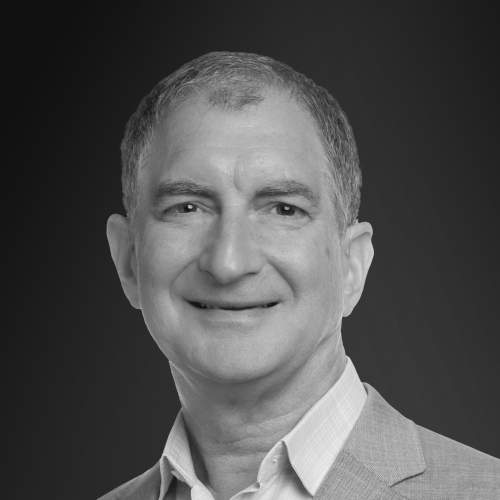
Opening Keynote
MARK PAPERMASTER
AMD Chief Technology Officer & Executive Vice President, USA
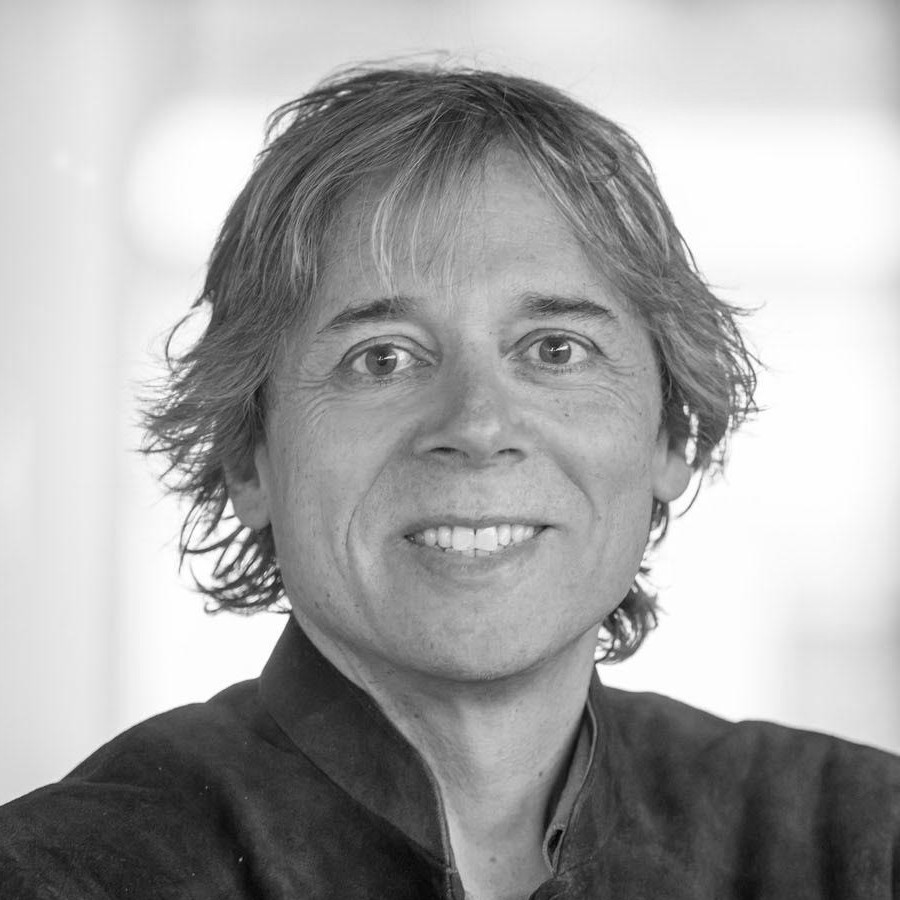
Midweek Keynote
BJORN STEVENS
Director of Climate Physics Department, Max Planck Institute for Meteorology Hamburg, Germany

Closing Keynote
YUTONG LU
Director, National Supercomputing Center, Guangzhou & Shenzhen, China
KEYNOTES ISC 2025 - 2016
2025
- Tuesday – Mark Papermaster, AMD, USAHPC and AI: A Path Towards Sustainable Innovation
- Wednesday – Bjorn Stevens, Max Planck Institute for Meteorology, Hamburg, GermanyThe New Landscape of Climate Computing
- Thursday – Yutong Lu, National Supercomputing Center, Guangzhou & Shenzhen, ChinaTackling Fragmentation in Exascale Supercomputing and Beyond
2024
- Monday – Kathy Yelick, University of California, Berkeley, USABeyond Exascale Computing
- Tuesday – Isabell Gradert, Airbus, GermanyFuture of Compute: How Cutting-Edge Computing Will Change the Way We Design Aircraft
- Wednesday – Rosa Badia, Barcelona Supercomputing Center, Spain & John Shalf, Lawrence Berkeley National Laboratory, USAReinventing HPC with Specialized Architectures and New Applications Workflows
2023
- Monday – Dan Reed, University of Utah, USAReinventing High Performance Computing
- Tuesday – Valentina Salapura, Google, USAA Hyperscaler’s Perspective on the Future of HPC from a Former BlueGene Architect
- Wednesday – Thomas Sterling, Indiana University, USA & Estela Suarez, FZ Jülich, GermanyHPC Achievement and Impact – Past and Future
2022
- Monday – Rev Lebaredian, NVIDIA, USA & Michele Melchiorre, BMW, GermanySupercomputing: The Key to Unlocking – The Next Level of Digital Twins
- Tuesday – Lorena Barba, George Washington University, USA10 Years from the Reproducibility PI Manifesto – It’s Time to Transform to Open Science
- Wednesday – Thomas Sterling, Indiana University, USAHPC Achievement and Impact – 2022
2021
- Monday – Xiaoxiang Zhu, TU Munich, GermanyArtificial Intelligence and Data Science in Earth Observation
- Tuesday – Matthias Troyer, MicrosoftQuantum Computing: From Academic Research to Real-World Applications
- Wednesday – Thomas Sterling, Indiana University, USAHPC Achievement and Impact – 2021
2020
- Wednesday – Thomas Sterling, Indiana University, USAHPC Achievement and Impact – 2020
2019
- Monday – Ivo Sbalzarini, TU Dresden, GermanyThe Algorithms of Life – Scientific Computing for Systems Biology
- Tuesday – John Shalf, Lawrence Berkeley National Laboratory, USAHPC Beyond Moore’s Law
- Wednesday – Thomas Sterling, Indiana University, USAHPC Achievement and Impact – 2019
2018
- Monday – Maria Girone, CERN, SwitzerlandTackling Tomorrow’s Computing Challenges Today at CERN
- Tuesday – Keren Bergman, Columbia University, USAEmpowering Flexible and Scalable High Performance Architectures with Embedded Photonics
- Wednesday – Thomas Sterling, Indiana University, USAHPC Achievement and Impact – 2018
2017
- Monday – Jennifer Tour Chayes, Microsoft, USANetwork Science: From the Massive Online Networks to Cancer Genomics
- Tuesday – Peter Bauer, ECMWF, UKForecasting the Future Role of HPC in Weather & Climate Prediction
- Wednesday – Thomas Sterling, Indiana University, USAHPC Achievement and Impact – 2017
2016
- Monday – Andrew Ng, Baidu, USAHow HPC is Supercharging Machine Learning
- Tuesday – Jacqueline H. Chen, Sandia National Lab, USATowards Exascale Simulation of Turbulent Combustion
- Wednesday – Thomas Sterling, Indiana University, USAHPC Achievement and Impact – 2016
KEYNOTES ISC 2015 - 2006
2015
- Monday – Jürgen Kohler, Daimler, Germany
2014
- Monday – Klaus Schulten, University of Illinois, USA
2013
- Monday – Bill Dally, Stanford University, USA
2012
- Monday – Guus Dekkers, EADS and Airbus, France
2011
- Monday – Henry Markram, EPFL, Switzerland
2010
- Monday – Kirk Skaugen, Intel, USA
2009
- Andreas von Bechtolsheim, Sun, USA
2008
- Satoshi Matsuoka, University of Tokyo, Japan
2007
- Burton Smith, Microsoft, USA
2006
- Peter Zencke, SAP, Germany
KEYNOTES ISC 2005 - 1996
2005
-
Wednesday – Horst Simon, Lawrence Berkeley National Lab, USA
Progress in Supercomputing: The Top Three Breakthroughs of the Last 20 and the Top Three Challenges for the Next 20 Years
-
Wednesday – Thomas Sterling, Caltech, USA
HPC Retrospect: Looking Back over the Last Year in HPC
-
Thursday – Alan Gara, IBM, USA
Peta-scale Computing during Disruptive Times
-
Friday – Wolfgang Gentzsch, MCNC, USA
Grid Computing in Research and Business around the World
2004
-
Wednesday – Thomas Sterling, Caltech, USA
HPC Retrospect: Looking Back over the Last Year in HPC
-
Wednesday – Steve Wallach, Chiaro Networks, USA
The Search for the Softron – Will we be able to develop software for Petaflop/s Computing?
-
Thursday – William Camp, Sandia National Lab, USA & Fred Weber, AMD, USA
The Red Storm Project – History and Anatomy of a Supercomputer
-
Friday – Reagan W. Moore, San Diego Supercomputer Center, USA
Integrating Data and Information Management
2003
-
Wednesday – Jim Gray, Microsoft, USA
Online Science – The World Wide Telescope as a Prototype for how Computation is Revolutionizing Science
-
Thursday – Horst Simon, NERSC, USA
The Divergence Problem in High Performance Computing
-
Friday – Justin Rattner, Intel, USA
Building Efficient HPC Systems from Catalog Components
2002
-
Thursday – Monika Henzinger, Google, USA
Indexing the Web: A Challenge for Supercomputing
-
Friday – Jack Dongarra, University of Tennessee, USA
High Performance Computing, Computational Grid, and Numerical Libraries
-
Saturday – Dona Crawford, Lawrence Livermore National Lab, USA
50 Years of Computing at LLNL as a Lens to the Future
2001
-
Thursday – Leonard Kleinrock, University of California, USA
Nomadic Computing and Smart Spaces
-
Friday – Horst Simon, Lawrence Berkeley National Lab, USA
The Future of Supercomputers
-
Saturday – Peter Zoller, University of Innsbruck, Austria
The Post Moore’s Law Era: Quantum Computing
2000
-
Thursday – Gene Amdahl, Sunnyvale, USA
Quo vadis Technology?
-
Friday – Carl Kesselman, University of Southern California, USA
GRIDS – a NEW Computing Paradigm
-
Saturday – Eric S. Raymond, Chester County Inter Link, USA
Open Source and Profit in HPC
1999
-
Thursday – Gordon Bell, Microsoft, USA
The Next Ten Years of Supercomputing
1998
-
Thursday – Larry Smarr, NCSA, USA
Supercomputers: Directions in Technology, Architecture and Applications
1997
-
Thursday – David Burridge, ECMWF, UK
Computing the Weather Forecast for Europe
1996
-
Thursday – Horst Körner, DLR, Germany
Anforderungen an Höchstleistungsrechner und ihre Nutzung beim Flugzeugentwurf (Requirements for High Performance Computers and Their Use in Aircraft Design)
KEYNOTES ISC 1995 - 1986
1995
-
Thursday – Christopher Johnson, University of Utah, USA
Large Scale Problems in Medicine: Modelling, Computation and Visualization
1994
-
Thursday – Wolfgang K. Giloi, TU Berlin, Germany
Bekenntnisse eines Computer-Architekten: Suprenum, MANNA und was kommt danach? (Confessions of a Computer Architect: Suprenum, MANNA, and What Comes Next?)
1993
-
Thursday – Steve Nelson, Cray Research, USA
Designing MPP Systems to Optimize Time-To-Solution Performance
1992
-
Thursday – Ulf Bohla, IBM, USA
Trends auf dem Gebiet des Supercomputing (Trends in the Field of Supercomputing)
1991
-
Thursday – Georg Färber, TU München, Germany
Mikroprozessoren als Basistechnologie künftiger Computergenerationen (Microprocessors as the Core Technology of Future Computer Generations)
1990
- Ulrich Seiffert, Volkswagen, Germany
1989
- Enrico Clementi, IBM, USA
1988
-
Friday – Adolf Schreiner, Uni Karlsruhe, Germany
Konzept des Supercomputer-Zentrums Karlsruhe (Concept of the Supercomputer Center Karlsruhe)
1987
-
Friday – Sidney Fernbach, USA
Status and Trends of Supercomputing in the USA
-
Saturday – Jack Dongarra, University of Tennessee, USA
Supercomputer Performance Considerations – The LINPACK Benchmark: An Explanation
1986
-
Friday – Lutz Richter, Uni Zürich, Switzerland
Die Supercomputerlandschaft (The Supercomputer Landscape)
-
Saturday – Wolfgang Schmidt, Dornier, Germany
Numerische Simulation in der Aerodynamik (Numerical Simulation in Aerodynamics)
PROGRAM & PAPER CHAIRS
Lorem ipsum
PROGRAM CHAIRS
2025: Torsten Hoefler, ETH Zürich, Switzerland
2024: Michela Taufer, University of Tennessee, USA
2023: John Shalf, Lawrence Berkeley National Laboratory, USA
2022: Keren Bergman, Columbia University, USA
2021: Martin Schulz, TU München, Germany
2020: David Keyes, KAUST, Saudi Arabia
2019: Yutong Lu, NSCC Guangzhou, China
2018: Horst Simon, Lawrence Berkeley National Laboratory, USA
2017: Jack Dongarra, University of Tennessee/ORNL, USA
2016: Satoshi Matsuoka, Tokyo Institute of Technologies, Japan
2015: Arndt Bode, LRZ, Germany
RESEARCH PAPER CHAIRS
2025: Amanda Randles, Duke University, USA
2024: Jeff Hammond, NVIDIA, Finland
2023: Abhinav Bathele, University of Maryland, USA
2022: Ana Lucia Varbanescu, University of Amsterdam, Netherlands
2021: Brad Chamberlain, HPE, USA
2020: Saday Sadayappan, Ohio State University, USA
2019: Carsten Trinitis, Technical University of Munich, Germany
2018: David Keyes, KAUST, Saudi Arabia
2017: Pavan Balaji, Argonne National Laboratory, USA
2016: Jack Dongarra, University of Tennessee, USA
2015: Thomas Ludwig, DKRZ, Germany
HANS MEUER AWARD WINNERS
Recognizing the most outstanding research paper presented at ISC, this award commemorates Dr. Hans Meuer, former ISC Chair and co-founder of the TOP500 project. Each year, the award highlights innovative contributions that advance the field of high performance computing.
The following papers have been selected as Hans Meuer Award winners over the years:
2025: Towards a Unified Architectural Representation in HPCQC: Extending sys-sage for Quantum Technologies
Authored by: Durganshu Mishra, Technical University of Munich, Germany
Co Authors: Stepan Vanecek and Martin Schulz, Technical University of Munich, Germany; Jorge Echavarria, Xiaolong Deng, Burak Mete and Laura Schulz, Leibniz Supercomputing Centre, Germany
2024: Evaluation of the Classical Hardware Requirements for Large-Scale Quantum Computations
Authored by: Daan Camps, Lawrence Berkeley National Laboratory, USA
Co Authors: Ermal Rrapaj, Katherine Klymko, Brian Austin and Nicholas J. Wright, Lawrence Berkeley National Laboratory, USA
2023: Expression Isolation of Compiler-Induced Numerical Inconsistencies in Heterogeneous Code
Authored by: Dolores Miao, University of California, USA
Co Authors: Ignacio Laguna, Lawrence Livermore National Laboratory, USA; Cindy Rubio-González, University of California, USA
2022: Remote OpenMP Offloading
Authored by: Johannes Doerfert, Argonne National Lab, USA
Co Authors: Atmn Patel, Argonne National Lab, USA/University of Waterloo, Canada
2021: A Performance Analysis of Modern Parallel Programming Models Using a Compute-Bound Application
Authored by: Andrei Poenaru, University of Bristol, UK
Co Authors: Wei-Chen Lin and Simon McIntosh-Smith, University of Bristol, UK
2020: Load-balancing Parallel Relational Algebra
Authored by: Sidharth Kumar, University of Illinois at Chicago, USA
Co Authors: Thomas Gilray, University of Alabama, USA
2020: Time Series Mining at Petascale Performance
Authored by: Amir Raoofy, Technical University of Munich, Leibniz Supercomputing Centre, Germany
Co Authors: Roman Karlstetter, Dai Yang, Carsten Trinitis and Martin Schulz, Technical University of Munich, Leibniz Supercomputing Centre, Germany
2019: GPUMixer: Performance-Driven Floating-Point Tuning for GPU Scientific Applications
Authored by: Ignacio Laguna, Lawerence Livermore National Laboratory, USA
Co Authors: Paul C. Wood, Ranvijay Singh and Saurabh Bagchi, Lawerence Livermore National Laboratory, USA
2018: Compiler-Assisted Source-to-Source Skeletonization of Application Models for System Simulation
Authored by: Jeremiah J. Wilke, Sandia National Labs, USA
Co Authors: Joseph P. Kenny, Samuel Knight and Sebastien Rumley, Sandia National Labs, USA
2017: Designing Dynamic and Adaptive MPI Point-to-point Communication Protocols for Efficient Overlap of Computation and Communication
Authored by: Hari Subramoni, The Ohio State University, USA
Co Authors: Sourav Chakraborty and Prof. Dhabaleswar Panda, The Ohio State University, USA
2016: Mitigating MPI Message Matching Misery
Authored by: Mario Flajslik, Intel Corporation, USA
Co Authors: James Dinan and Keith Underwood, Intel Corporation, USA
2015: Accelerating LBM AND LQCD Application Kernels by In-Memory Processing
Authored by: Thorsten Hater, Jülich Supercomputer Center, Germany
Co Authors: Paul F. Baumeister, FZ Jülich; Hans Boettiger, IBM Deutschland Research & Development; Jose R. Brunheroto, IBM T.J. Watson Research Center; Thilo Maurer, IBM Deutschland Research & Development; Andrea Nobile, FZ Jülich; Dirk Pleiter, FZ Jülich, Germany
JACK DONGARRA AWARD WINNERS
Recognizing exceptional early-career researchers at ISC, this annual award and lecture series honors Professor Jack Dongarra’s remarkable contributions to the field of high performance computing and the global HPC community. Introduced to the ISC conference series in 2023, the award highlights up-and-coming researchers whose innovative work drives scientific progress and advances the state of the art in HPC.
The following recipients have been honored with the Jack Dongarra Early Career Award over the years:
2025
Lin Gan, Tsinghua University, China
2024
Amanda Randles, Duke University, USA
Edgar Solomonik, University of Illinois at Urbana–Champaign, USA
2023
Torsten Hoefler, ETH Zürich, Switzerland
ISC PROCEEDINGS OVERVIEW
Each year, the ISC Research Paper and Workshop Proceedings capture the most recent developments and findings in high performance computing, as presented at the conference.
- 2025: Research Paper Proceedings (IEEE Xplore) | Workshop Proceedings (Springer)
- 2024: Research Paper Proceedings (IEEE Xplore) | Workshop Proceedings (Springer)
- 2023: Research Paper Proceedings (Springer) | Workshop Proceedings (Springer)
- 2022: Research Paper Proceedings (Springer) | Workshop Proceedings (Springer)
- 2021: Research Paper Proceedings (Springer)
- 2020: Research Paper Proceedings (Springer)
- 2019: Research Paper Proceedings (Springer)
- 2018: Research Paper Proceedings (Springer)
- 2017: Research Paper Proceedings (Springer)
- 2016: Research Paper Proceedings (Springer)
- 2015: Research Paper Proceedings (Springer)
- 2014: Research Paper Proceedings (Springer)
- 2013: Research Paper Proceedings (Springer)