

CONNECTING THE DOTS

ISC 2026

CONFERENCE HIGHLIGHTS

June 22 – 26, 2026
CCH, Hamburg
GERMANY

Why the ISC 2026 Program Matters

The days of HPC being entirely about building the biggest machine and chasing peak FLOPS are gone. These are still incredibly important concerns, but the workloads driving today’s systems blend large-scale simulation, AI, and data under increasingly tight power and cost constraints.

At ISC 2026, the Invited Program reflects that shift. AI is embedded throughout the stack, energy has become a first-class design parameter, and the unit of value is the workflow that gets science or insight done, not a single benchmark number.

EARLY-BIRD REGISTRATION ENDS ON MAY 6, 2026

Insights Across the Stack

Throughout the topic areas, you can see how architecture, software, and applications are being rethought for this new reality. 

Sessions dig into the specifics behind a variety of topics – how do we push past the memory wall as AI training scales? What does it actually mean to run confidential computing or quantum workflows at supercomputing scale? How do we design AI factories that fit on real grids, not infinite ones?

The program is less about isolated technologies and more about the trade-offs practitioners are making as they design, operate, and use high-end systems. Whether you are running leadership-class systems or just entering the field, the program is designed to give everyone concrete insights that they can bring back to their own HPC and/or AI environments.

System Architecture & Hardware Components
From memory to on-chip networks, this area encompasses how system design is being pushed by AI-scale data and heterogeneous compute. Specifically, the “Advanced Memory Architecture” panel will take the von-Neumann bottleneck head-on. This will include discussions of solutions like memristors, in-memory computing, and memory disaggregation. Also, the “On-Chip Networks” session brings designers together to talk about chiplet-based processors and the realities of wiring hundreds of compute units to ever-faster memory.

This matters because the answers given here will help to shape which architectures are practical at the rack and data center level. What’s more, they’ll discuss how far we as a community can push performance before power, bandwidth and complexity limit us.
VIEW SESSIONS
Programming Environments & System Software
This area reflects the pressure on software stacks to support new languages, AI-heavy workloads, and stronger security. Attendees will hear discussions on emerging alternatives to traditional HPC programming models. As workloads become more sensitive and more complex, decisions in this space will determine which centers can attract regulated data.

What’s more, it will show how flexible they can be with new languages and tools, as well as what overhead we are willing to pay for stronger security.
VIEW SESSIONS
Algorithms & Performance
This area focuses on how we are trading precision, speed, and energy rather than optimizing a single metric. The invited session on mixed precision examines how to design algorithms that safely lower precision where possible, as well as how to measure correctness, performance, and energy use. A companion panel on performance, efficiency, and sustainability explores how data management, communication, and I/O choices impact performance and power consumption.

As systems become more constrained by an ever-tightening energy market, algorithmic choices become so much more important. The techniques discussed in this session will influence the cost and feasibility of running the future’s large-scale simulations and AI workloads.
VIEW SESSIONS
Applications & Use Cases
This is all about how HPC, AI, and data are being woven into workflows that matter outside the data center. The panel looks at how AI and HPC-edge continuum help users make decisions during fast-moving events. Additionally, the digital twin session focuses on workflows that link models, streaming data, and AI to track and predict complex natural, engineered, and human systems.

These are the use cases that funding agencies, governments, and companies cite to justify investments in HPC and AI infrastructure.
VIEW SESSIONS
Machine Learning & AI
This section reflects on the obvious fact that AI is now inseparable from HPC. It functions now as both a workload and a design driver.
The “AI for Science” invited session will explore how AI is reshaping scientific discovery and what it now means to build AI systems for science rather than repurposing general models. Additionally, the “AI Factories and Gigawatt Datacenters” panel looks at the infrastructure side and will discuss power sourcing, grid integration, liquid cooling, heat reuse, energy-aware software, and more.

The conversations in this area will define what AI-ready infrastructure actually looks like.
VIEW SESSIONS
Quantum Computing
The quantum track will discuss the idea that quantum computing is something that HPC must help build, not just eventually accelerate. The panel on “HPC-Enabled Path to Using, Scaling, and Operating QC” looks at how classical supercomputers support emulation, QEC decoding, scheduling, and control for emerging quantum sessions.
On top of that, the invited session on software tooling and libraries focuses on what is needed to actually build and run HPC-QC applications.

These discussions will show where quantum computing is already creating work for HPC centers. Additionally, attendees can expect conversations about where hybrid HPC-QC workflows might realistically land in the next few years.
VIEW SESSIONS
Weather & Climate
This invited session showcases kilometer-scale weather and climate models running at exascale. ISC will highlight teams that are pushing global simulations to resolutions that were previously infeasible.

Weather and climate modeling has always struggled with a crossroads of issues. Weather and climate systems are extremely complex and quickly change and modeling them with proper granularity demands a huge amount of computing performance.
What’s more, weather and climate are among the most visible and socially critical HPC workloads. It’s something the public regularly runs into and requires. Advances here influence everything from daily forecasts to long-term climate risk assessment.
VIEW SESSIONS
NextGen Women: Energizing HPC
This highlights cutting-edge work in energy-efficient HPC and AI while elevating women and researchers from underrepresented communities. The session will combine deep technical talks with a deliberate focus on visibility and community-building around the future of sustainable computing.

Energy efficiency and talent diversity are both enormous issues for HPC specifically and for computing as a whole.
VIEW SESSIONS

Explore the ISC 2026 conference program and start building a schedule that connects your own questions to the conversations happening in Hamburg this year.

KEYNOTES AND SPEAKERS

OPENING KEYNOTE

MARTIN SCHULZ
Professor in Computer Engineering, TUM & Member of the Board of Directors at LRZ, Germany

→ View Abstract & Speaker Bio

MIDWEEK KEYNOTE

AMANDA RANDLES
Associate Professor of Biomedical Sciences and Biomedical Engineering at Duke University

→ View Abstract & Speaker Bio
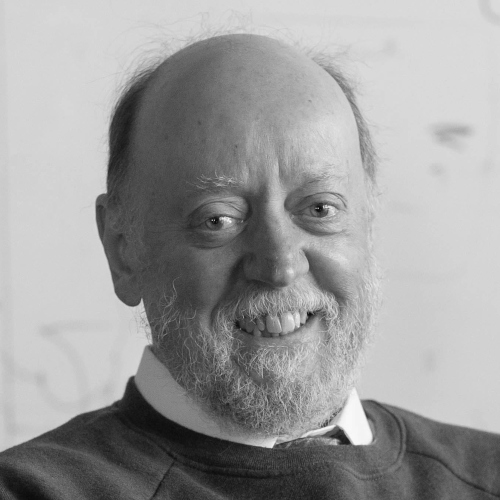
CLOSING KEYNOTE

JACK DONGARRA
Research Professor Emeritus, University of Tennessee & Distinguished Research Staff Member, ORNL, USA

→ View Abstract & Speaker Bio


OPENING KEYNOTE

MARTIN SCHULZ
Professor in Computer Engineering, TUM & Member of the Board of Directors at LRZ, Germany

→ View Abstract & Speaker Bio


MIDWEEK KEYNOTE

AMANDA RANDLES
Associate Professor of Biomedical Sciences and Biomedical Engineering at Duke University

→ View Abstract & Speaker Bio


CLOSING KEYNOTE

JACK DONGARRA
Research Professor Emeritus, University of Tennessee & Distinguished Research Staff Member, ORNL, USA

→ View Abstract & Speaker Bio

WHAT'S IN THE CONFERENCE PASS?

Exhibition Pass

June 23-25, 2026
Exhibition & Selected Sessions
  • 24h online Exhibition including all online vendor content
  • Exhibition
  • Exhibition Opening Reception
  • Closing Keynote & Session
  • TOP500 Session
  • HPC Around the World
  • Walking Talk
  • Tech Talk by Women in HPC (WHPC)
  • Student Cluster Competition (SCC) Opening & Award Session
  • Community Stage Meetups
  • Birds-of-a-Feather Sessions
  • Research, Project, WHPC Posters on display and online
  • Research, Project, WHPC Poster Reception
  • WHPC Poster Pitch & Awarding
  • First-Time Exhibitor Pitch
  • HPC Solutions Forum
  • Vendor Roadmaps
  • Vendor Showdown
  • Meet & Greet
  • Social Activities
Choose Pass & Register

START WITH THE TUTORIALS

ISC Tutorials are designed from the ground up to give you a structured, small-group way into complex topics before the main program intensity kicks off. Whether you’re new to HPC-AI or you’re just moving into the field, a tutorial lets you spend either half a day or a full day with experts who have already made the mistakes.

They can walk you through concepts, tools, and live examples instead of you just trying to piece everything together from talks and hallway conversations.

In 2026, tutorial pass prices are reduced across registration categories compared to last year. Many attendees use tutorials as a way to get oriented, meet others with similar interests, and build a foundation that makes the rest of the week more productive.

high-impact tutorial themes include:

Add a Tutorial Pass to your registration to secure a seat in the sessions that best match your current projects and the skills you want to build.

INside the WORKSHOPS

ISC 2026 features 23 workshops that act as focused meeting points for specific communities.

Specifically, algorithm developers, system operators, application scientists, vendors, and emerging user groups will be able to work together. Workshops often mix technical talks with open discussion and planning, making them ideal places to compare notes with peers.

If the main program shows where the field is heading, workshops are where individual communities decide how to get there together.

VOICES FROM THE COMMUNITY

JOIN THE GLOBAL COMMUNITY!

External Website

You are now leaving isc-hpc.com.
The following link will take you to an external website. ISC is not responsible for its content.